Legal nurse consultant qualifications come down to three things an attorney can verify: an active nursing license, documented clinical experience in the relevant setting, and training in how medical records are used in litigation. This page explains what each one means for chart review, standard-of-care analysis and deposition support at Nurse Becca Consulting.
What does a nurse consultant’s background actually add to a malpractice case?
A nurse consultant’s background lets her read a chart the way the care team wrote it, which is the part of a medical record attorneys most often cannot interpret alone. Charts are shorthand, templates and timestamps. Knowing what a normal shift’s documentation looks like is what makes an abnormal one visible.
That matters at three points in a file:
- Intake: deciding whether the records support a viable claim or defense before you spend money on experts.
- Discovery: knowing which records to request, including those that rarely arrive unless someone asks for them by name.
- Deposition and trial preparation: building questions for nursing witnesses that a clinician would recognize as precise.
Nurse Becca Consulting focuses on this medical-legal research for attorneys, and the sections below tie each qualification to the work it supports.
What are Nurse Becca’s clinical credentials and licenses?
The credentials that count are the ones you can check against a primary source: the nursing license, the years in practice, and the clinical settings. Those specifics belong on a CV and in a license lookup, not in a marketing paragraph, so ask for them directly and confirm them yourself.
The table shows what each credential tells you and the case work it supports.
What to verify
And What it tells you
Case work it supports
Active nursing license, in good standing; The person is legally authorized to practice nursing and has no public discipline Credibility of any standard-of-care opinion
Years and clinical setting (acute care, long-term care, and so on) Whether she has worked under the conditions the chart describes Matching the reviewer to the facts of the file Clinical specialty Familiarity with the protocols, assessments and documentation of that area
Chart review and timeline building Medical-legal training or certification Understanding of attorney work product, privilege and what a record can prove Deposition support and report writing
Your state board of nursing runs a public license lookup. Use it before you retain anyone, including a consultant you already trust.
Where did the bedside and clinical experience come from, and why does it matter to a chart review?
Bedside experience matters because a nurse who has charted in real time knows how documentation gets produced and where it gets thin. Her years and settings are specific to her record, so request them in writing and compare them with your file.
Here is what clinical experience lets a reviewer recognize on the page:
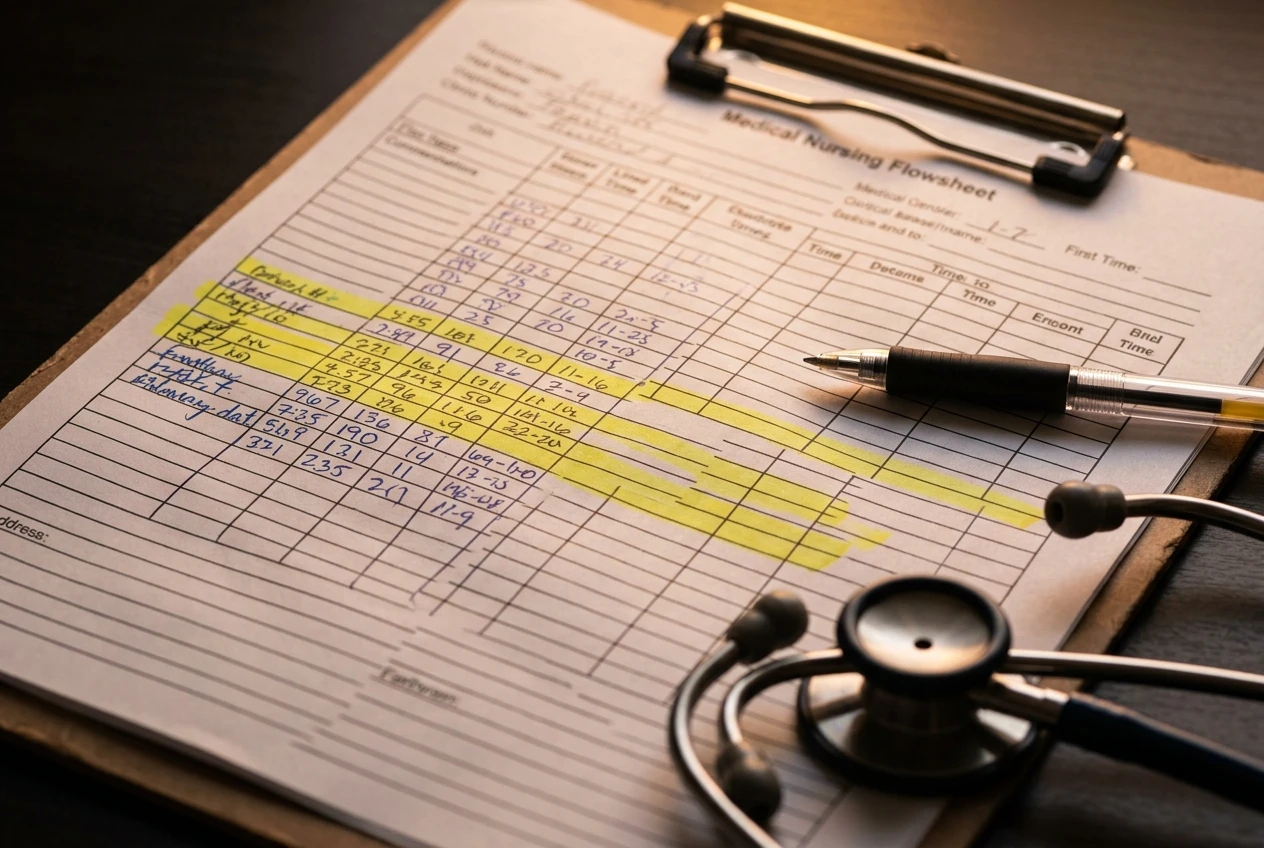
- Entries that repeat word for word across shifts, which can indicate copied-forward charting rather than a fresh assessment.
- Gaps between scheduled assessments and documented ones.
- Late entries and what they suggest about when care was actually delivered.
- Whether a reassessment followed a change in condition, a medication, or a procedure.
Setting changes the answer. A reviewer with long-term care experience reads a nursing home file differently from one whose career was entirely in an operating room or an emergency department. Ask which setting the consultant has actually worked in, and whether it matches yours. Our piece on post-operative documentation red flags shows the kind of gap a clinical reader looks for.
How did a nursing career turn into medical-legal consulting?
Nurses move into medical-legal consulting by adding a second skill to their clinical one: translating a record into findings an attorney can use. The clinical judgment is the same. What changes is the audience, the standard of proof, and the format of the work product.

For attorneys, the useful question is what that second skill rests on. Some consultants hold the voluntary LNCC credential, issued through a legal nurse consultant certification board. Others rely on coursework or on file experience alone. None of these is automatically disqualifying, and none replaces the license. Ask the consultant to describe her medical-legal training and then verify any certification with the board that issued it.
Also ask about the limits of the role. A nurse consultant can speak to nursing practice and documentation. Medical causation usually calls for a physician, and what a nurse may say as a testifying expert varies by jurisdiction. A consultant who tells you where her opinion ends is easier to rely on than one who claims coverage of everything.
To read the personal introduction, see the About Me page.
What does the work look like on a nursing home, personal injury or malpractice file?
On any of these files, the work starts with the complete record and ends with a written analysis you can use. The common deliverables are a chronology, a list of deviations from the applicable nursing standard with the chart entries that support them, and a summary of what is missing from the record.
The emphasis changes by case type:
- Nursing home cases: staffing logs, medication administration records, fall risk assessments and pressure ulcer staging. Patterns across weeks usually matter more than any single entry. See how to read a nursing home staffing log for an example.
- Medical malpractice: the sequence of assessments, orders and responses around the adverse event, plus how the care team communicated.
- Personal injury: the link between the documented injury and the treatment that followed, and whether the course of care fits the claimed damages.
Deposition support is a separate stage. A consultant can help you prepare questions for nursing witnesses and review testimony against the chart. The article on what a nurse consultant does in the room during a deposition covers that stage in detail, and the overview of a legal nurse consultant for medical malpractice explains the services as a whole.

How do you vet any nurse consultant before you retain one?
Vet a nurse consultant the way you would vet any expert: verify the credentials independently, then test the work. Use this sequence.
- Look up the nursing license on the state board’s public site and note any discipline or restrictions.
- Request a current CV and compare the listed settings and years with the type of file you have.
- Ask which case types she has worked and what the deliverable looked like. A redacted sample report is reasonable to request.
- Ask how she handles conflicts of interest, and confirm in writing that your engagement is confidential and structured to protect work product.
- Ask where her opinion stops and when she would recommend a physician expert.
- Agree on scope, fee structure and turnaround before any records are sent.
A qualified consultant should welcome every one of these questions. Resistance to verification tells you more than any credential on a website.
How do you start a conversation about your case?
Start with the facts you already have: the type of case, the care setting, the dates of the event, and what records are in hand. You do not need a complete file. A short description is enough to discuss whether a chart review, a standard-of-care analysis or deposition support fits.
Be ready to say what decision the work needs to support, such as whether to accept a case, whether to settle, or how to prepare for a deposition. That determines the scope and the cost. If a nurse consultant is not the right fit for your file, a direct conversation is the quickest way to find out.
Contact Nurse Becca Consulting to talk through whether a chart review or standard-of-care analysis fits your case.