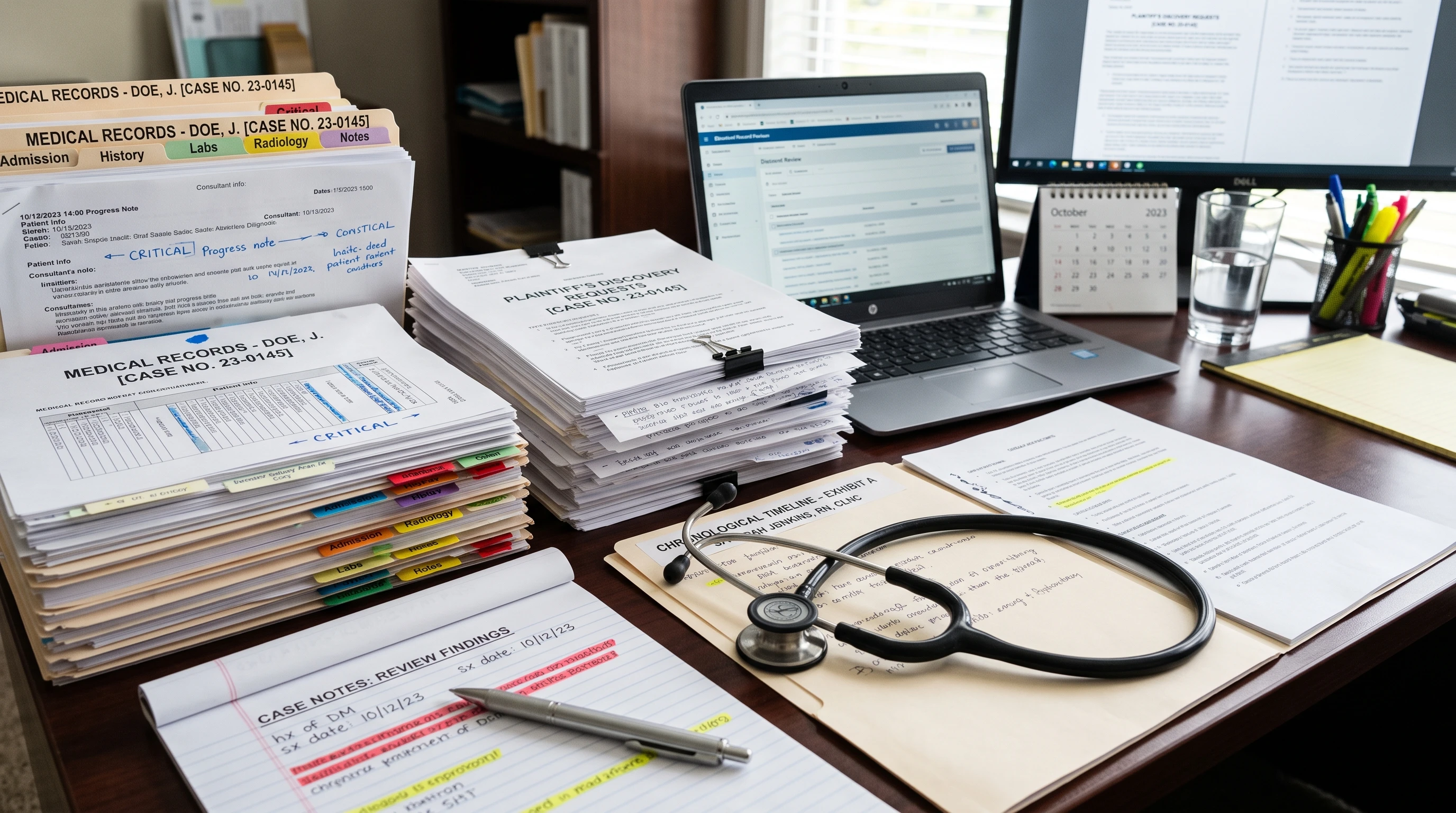
 Legal nurse consultants bring a unique skill set to the legal discovery process. With a background in clinical nursing and a thorough understanding of medical records, I’ve learned that my input helps legal teams manage complex cases, make sense of the facts, and develop smart strategies. When discovery involves thousands of pages of medical records, timelines, and technical terms, having a nurse who understands both the clinical and legal side can make a huge difference.
Many attorneys feel overwhelmed sorting through medical files or interpreting clinical language. If you’re handling a case involving injuries, malpractice, or longterm care, a legal nurse consultant can help you see the story behind the records. By working alongside legal teams, I help clarify medical events, prepare for depositions, and spot details that might otherwise get missed.
I’m going to lay out five key ways I add value during discovery, based on my experience and what I’ve seen other consultants provide. These points can help you track down how to use a legal nurse consultant to get the most benefit in your cases.
1. Medical Record Organization and Chronology
Managing medical records is one of the first hurdles many legal teams face during discovery. Medical files can show up in any order and span years or even decades. I’ve found that effective organization saves time and headaches for attorneys and their staff.
I start by looking over and organizing all records in chronological order. This means sorting everything by date—doctor’s notes, lab results, surgical reports, and any related correspondence. Creating a clean timeline makes it much easier to follow the sequence of events and spot any gaps or inconsistencies.
When I build a medical chronology, I summarize each entry in plain language, so attorneys can quickly find important information. This is especially helpful for depositions, settlement negotiations, or presenting to a jury. Key medical events are highlighted, and I flag missing or duplicate records, so the legal team can raise these issues early.
Benefits for Legal Teams:
- Clear and easy to follow medical history for every client or patient.
- Ability to find relevant records quickly for production or review.
- Fewer surprises because missing or incomplete data gets handled sooner.
When records are organized and summarized well, the whole discovery process runs more smoothly. Attorneys have told me that a strong chronology helps them save time and gives them more confidence in court.
2. Medical Literature Research and Analysis
A big part of discovery in personal injury or medical malpractice cases involves figuring out whether the standard of care was met. That means checking out medical research, guidelines, and other literature to support or challenge claims.
Because of my nursing background and research skills, I know where to find trustworthy sources, such as published studies, clinical guidelines, or position statements from professional organizations. I look into current literature and compare it to the details in the case.
I look for expert consensus on clinical topics such as treatment options, medication side effects, or surgical outcomes. Then I connect those references directly to specifics in the case, which helps back up written reports or build strong cross-exam questions.
How This Adds Value During Discovery:
- Helps attorneys prepare solid interrogatories and request the right documents.
- Supports claims or defenses by linking case details to widely accepted clinical guidelines.
- Makes it easier to spot where opposing experts may be stretching or misrepresenting science.
Careful research lets me explain medical issues in plain language. Attorneys can use this info in motions, during depositions, or at mediation. When literature and facts sync up, it adds a strength that’s tough to miss.
3. Identifying Potential Experts and Evaluating Testimony
Picking the right expert witness can be a game changer in many cases. I’ve helped attorneys find and prescreen medical experts who fit the case—both in credentials and experience. Since I understand several specialty areas within nursing and medicine, it’s easier for me to spot who would be credible and clear on the witness stand.
Beyond finding experts, I review and summarize opposing experts’ reports and deposition transcripts. I look for inconsistencies, unclear statements, or mistakes related to medical facts. Using my experience, I suggest follow-up questions for depositions or draft outlines for cross-examination.
Ways I Add Value with Expert Testimony Review:
- I help narrow down expert specialties and avoid wasting time on weak candidates.
- I suggest questions for opposing experts that expose weaknesses in their stance.
- I let attorneys know if an expert’s story doesn’t match with accepted standards or clinical practice.
With this approach, legal teams walk into depositions better prepared and build stronger arguments for or against main claims.
4. Clarification of Medical Terminology and Causation Issues
Medical records are full of technical jargon, abbreviations, and documentation styles that can confuse people outside clinical fields. I translate this language into everyday terms for attorneys and clients.
Much of my time during discovery is spent explaining how certain diagnoses, medications, or surgeries relate to the alleged injuries or events. This can help narrow down what really matters for liability and damages. When causation must be nailed down, like whether a certain event led to a health problem, my insight is very useful.
Examples Where This Helps:
- I break down what a diagnosis code actually means for the client’s daily life.
- If a note says “possible pneumonia,” I spell out what evidence supports or challenges that diagnosis.
- I flag when language in the records is vague or doesn’t match up, and suggest points for clarification in interrogatories or depositions.
Clear explanations of medical terms make discovery more productive, allowing attorneys to stick to legal questions instead of getting stuck on technical stuff.
5. Spotting Red Flags and Opportunities for Further Discovery
Another major way I support legal teams is by spotting details that could easily slip by. As someone used to reviewing medical records for documentation slip-ups and patterns, I’ve learned to catch things that deserve follow-up.
Sometimes, there are unexplained gaps in the records—periods without notes or visits. Other times, patterns of repeated testing, abrupt medication changes, or conflicting notes point to bigger issues. If I notice potential drug interactions, deviations from typical treatment, or signs of tampering, I highlight these points for early action.
Practical Benefits:
- Gives attorneys a heads-up on where extra records should be requested.
- Suggests subpoenas for missing documentation or provider input.
- Pinpoints records that may become key during settlement or trial prep.
By picking up on red flags early, I help legal teams build stronger cases and steer clear of surprises as the case goes on. Even small clues can make a tremendous difference.
Beyond the Basics: More Ways Legal Nurse Consultants Add Value
The five areas above cover the key ways legal nurse consultants help attorneys during discovery. My part often goes even further, especially on cases involving catastrophic injuries or longterm care. For example, I might create visual aids, map out medical timelines, or help calculate future care costs. I can also step up in preparing witnesses for depositions and clear up complex health histories for both plaintiff and defense teams.
The partnership works best when the legal nurse consultant is brought in early in discovery, but I’ve joined cases at every stage and still found plenty of ways to help. I focus on building practical shortcuts that save attorneys time and add real insight for clients.
Additionally, legal nurse consultants can put together educational sessions for attorneys or staff on topics such as pain management, common medication errors, or realistic prognoses for various medical conditions. These workshops go a long way in lifting up the legal team’s ability to handle cases with medical elements.
In some cases, my involvement extends to supporting trial preparation—developing courtroom exhibits, summarizing extensive charts in a userfriendly way, or helping attorneys do a once-over of deposition questions. This type of support can take up a case’s presentation a notch and persuade juries who may not have medical backgrounds.
Final Thoughts
Working with a legal nurse consultant during discovery offers clear, everyday benefits for law firms handling medically tough cases. From breaking down dense medical records to catching details that deserve more review, my background as a nurse and consultant helps bridge medicine and law. If you’re facing discovery with stacks of medical documents and technical info, bringing in a nurse consultant can smooth the process and give your team the support it needs from start to finish.
I’d love to learn about challenges you’ve faced with medical discovery or how a legal nurse consultant pitched in for your own cases. Feel free to reach out with your questions or experiences; sharing insights only makes our field stronger.