HOW TO BECOME A NURSE COACH
A Practical Guide for Nurses and Nurse Consultants
About the Author — Adaora Obidigwe
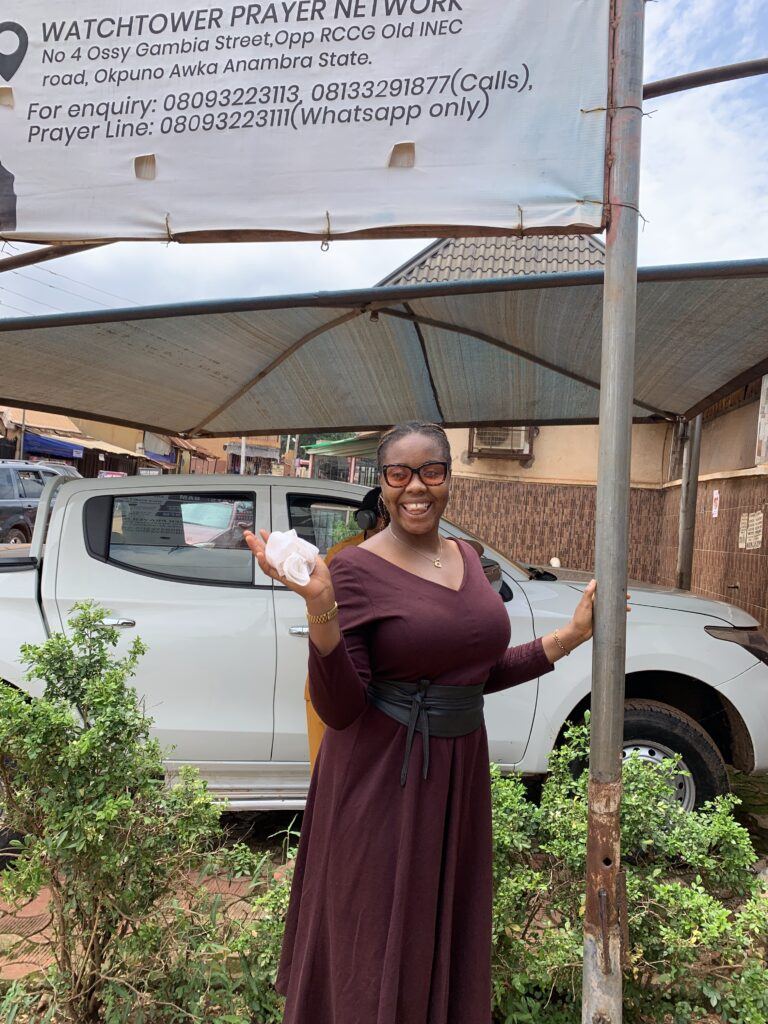
Adaora Obidigwe is a Registered Nurse, Cardiothoracic Nurse, Nurse Coach, and Health Educator passionate about helping nurses recognize the possibilities that exist beyond traditional bedside nursing. As a healthcare professional, she understands the value of clinical knowledge, patient education, communication, and advocacy—and believes nurses can use these skills to create meaningful impact in different areas of healthcare and professional development. Her work focuses on health education, professional growth, personal branding, and helping nurses discover opportunities that allow them to build influence and additional income while still leveraging their nursing expertise. Through her work and her Beyond the Hospital Walls platform, Adaora encourages nurses to think beyond conventional career paths and intentionally build careers that align with their skills, interests, and goals. She is particularly passionate about showing nurses that being a nurse does not have to mean limiting themselves to one role or one environment. Nursing can be a foundation for a much broader professional journey.
Adaora Obidigwe, Registered Nurse and Nurse Coach.
What Is a Nurse Coach?
Nursing is one of the most versatile professions in healthcare. When people hear the word “nurse,” they often picture someone working in a hospital, administering medications, monitoring patients, assisting with procedures, or providing bedside care.
Those responsibilities are essential, but nursing does not have to end at the bedside.
The knowledge, communication skills, clinical experience, empathy, critical thinking, patient-education skills, and advocacy skills nurses develop can open doors to many different professional opportunities. One of those opportunities is nurse coaching.
A nurse coach combines nursing knowledge with coaching principles to support individuals as they identify health goals, explore barriers, make informed decisions, and work toward sustainable change.
Nurse coaching is not simply about giving health advice. It is about creating a collaborative process in which the client becomes an active participant in their own health journey.
Why Are Nurses Well-Suited to Become Nurse Coaches?
Nurses already use many of the foundational skills required for effective coaching.
They listen to patients. They educate families. They explain complicated medical information. They advocate for people. They assess situations, identify concerns, collaborate with healthcare professionals, and encourage patients through difficult experiences.
These skills are highly transferable.
The major shift is learning how to move from a model in which the healthcare professional primarily tells the patient what to do toward a collaborative approach that helps the client identify what matters to them and what they are realistically prepared to change.
For example, instead of simply telling a client, “You need to exercise more,” a coaching conversation might explore: What does being active mean to you? What is making exercise difficult right now? What type of movement do you enjoy? What is one realistic step you could take this week?
That difference may seem small, but it changes the conversation from instruction to partnership.
Step 1: Build on Your Nursing Foundation
Your nursing education and experience provide the foundation for becoming a nurse coach.
Clinical practice exposes nurses to health assessment, patient education, disease prevention, communication, care coordination, patient advocacy, and healthcare decision-making. Your specialty can also influence the area in which you eventually coach.
A cardiovascular nurse may be particularly interested in cardiovascular wellness and prevention. A nurse with experience in diabetes care may focus on supporting clients with lifestyle and self-management goals. A nurse experienced in women’s health may develop a coaching focus around women’s wellness.
You do not have to throw away your nursing identity to become a coach. Your nursing experience can become one of your greatest professional advantages.
Step 2: Learn What Coaching Actually Involves
Being a nurse and being a nurse coach are related, but they are not identical roles.
A nurse may be trained to assess, intervene, educate, and provide clinical care. Coaching requires additional skills centered on helping clients clarify goals, identify barriers, develop strategies, and take ownership of their decisions.
Aspiring nurse coaches should develop skills such as active listening, motivational interviewing, powerful questioning, goal setting, behavior-change strategies, accountability, emotional intelligence, and client-centered communication.
One of the most important skills is learning to listen without immediately trying to fix everything.
Nurses are trained to recognize problems and respond. In coaching, the most useful response may sometimes be a thoughtful question that helps the client discover a solution that is realistic for them.
Step 3: Consider Formal Nurse Coaching Education
If you are serious about nurse coaching, consider formal education or training in coaching.
Programs vary, so research carefully before investing your time and money. Look for education that teaches practical coaching skills rather than simply offering a title or certificate.
Consider whether the program addresses coaching methodology, ethics, communication, behavioral change, motivational interviewing, professional boundaries, and practical coaching experience.
Depending on your location, professional goals, and scope of practice, certification may also be valuable.
Before choosing a program, ask: Is the training credible? Does it provide practical experience? Does it fit my professional goals? Will it help me serve clients competently? Is the credential meaningful in the setting in which I intend to work?
The right training can give you both competence and confidence.
Step 4: Choose a Nurse Coaching Niche
You do not have to coach everyone.
In fact, trying to serve everyone can make it difficult for potential clients to understand what you actually do. Choosing a clear niche can help you communicate your expertise and attract the people you are best equipped to serve.
Possible areas include chronic disease management, preventive health, lifestyle coaching, cardiovascular wellness, women’s health, health education, healthcare navigation, and professional coaching for nurses.
Your niche should ideally sit at the intersection of your experience, knowledge, interests, and the needs of the people you want to help.
A clear niche does not mean you can never work with anyone outside it. It simply gives your professional identity a clear starting point.
Step 5: Understand Your Professional and Legal Boundaries
This is particularly important for nurse coaches and nurse consultants.
A nursing license does not automatically authorize a nurse to provide every type of healthcare service. Nurse coaches need to understand the distinction between coaching, health education, nursing practice, medical diagnosis, and medical treatment.
Coaching should not be presented as a substitute for appropriate medical care. If a client has symptoms or a condition requiring medical evaluation or treatment, the nurse coach should work within their scope and make an appropriate referral when necessary.
Nurse coaches should also pay attention to issues such as confidentiality, informed consent, documentation, professional liability, telehealth requirements, advertising claims, and jurisdiction-specific regulations.
The exact requirements can vary by location and by the services being offered. When a legal or regulatory question arises, appropriate professional guidance should be sought rather than relying on assumptions.
For attorneys and legal nurse consultants, these distinctions can also be important when evaluating a healthcare professional’s qualifications, role, services, documentation, or responsibilities.
Can Nurse Consultants Become Nurse Coaches?
Yes. Nurse consultants already possess valuable skills that can transfer into coaching.
Legal nurse consultants, for example, may review medical records, analyze clinical information, identify relevant healthcare issues, conduct research, communicate complex medical concepts, and assist attorneys in understanding healthcare matters.
Nurse coaching is different from legal nurse consulting, but there can be overlap in skills such as critical thinking, communication, professional judgment, research, healthcare knowledge, and the ability to explain complex information clearly.
A nurse consultant who wants to become a coach should still obtain appropriate coaching education and understand the difference between the two roles. Existing expertise is an advantage, but it does not replace the need to learn the principles and responsibilities of coaching.
Step 6: Develop Your Professional Brand
Becoming qualified is only part of building a nurse coaching career. People also need to understand who you are, what you do, and why your services matter.
Your professional brand should answer three questions:
Who do you help?
What problem do you help them solve?
What makes your approach valuable?
Instead of simply saying, “I am a nurse coach,” communicate the specific value you provide.
For example: “I help nurses develop healthier, more intentional career strategies so they can expand their professional opportunities beyond traditional bedside roles.”
You can demonstrate your expertise through educational articles, social media, webinars, workshops, speaking engagements, newsletters, and professional networking.
For nurse consultants and professionals who may interact with attorneys, a clear and credible professional presence is especially important. Your website and professional profiles should accurately communicate your credentials, experience, areas of expertise, and services.
Where Can Nurse Coaches Work?
Nurse coaching can take place in many settings, depending on a nurse’s qualifications, scope, location, and business model.
Potential environments include healthcare organizations, wellness programs, corporate wellness, telehealth, community health, health education, digital health companies, consulting practices, group coaching, workshops, and independent practices.
Some nurses build coaching alongside their existing clinical careers. This allows them to learn, gain experience, and test their interests before making a larger career decision.
Others eventually move into coaching full-time.
There is no single correct path. The key is to build your career responsibly and make sure the services you provide match your training, credentials, and professional scope.
What Skills Make a Great Nurse Coach?
A successful nurse coach needs more than clinical knowledge.
Some of the most important skills include:
• Active listening — hearing what the client is actually saying rather than preparing the next response.• Empathy — creating a safe, respectful environment without judgment.• Communication — translating complex healthcare information into language clients can understand.• Critical thinking — recognizing when an issue is within the coaching role and when referral is appropriate.• Goal setting — helping clients turn broad intentions into realistic steps.• Accountability — supporting clients in following through on commitments.• Adaptability — recognizing that different clients need different approaches.• Professional boundaries — knowing what you can and cannot provide.
These skills help transform nursing knowledge into a coaching relationship that is both supportive and professionally responsible.
Do You Have to Leave Bedside Nursing to Become a Nurse Coach?
No.
This is one of the most important things nurses should understand.
Becoming a nurse coach does not automatically mean resigning from your nursing position.
You can begin by learning about coaching. You can take a training program. You can practice your communication and coaching skills appropriately. You can develop educational content. You can identify a niche. You can gradually build your professional network.
Over time, you can decide whether coaching becomes a side practice, an additional professional service, or a larger part of your career.
Your nursing career does not have to disappear for your professional identity to expand.
In fact, your clinical experience may make you a stronger coach because it gives you a deeper understanding of patients, families, healthcare systems, and the realities people face when trying to improve their health.
The Future of Nursing Goes Beyond the Bedside
Healthcare is changing, and people need more than treatment after they become sick. They also need education, prevention, support, health literacy, accountability, and help navigating increasingly complex healthcare systems.
Nurses are uniquely positioned to contribute to this work because they combine healthcare knowledge with human connection.
Nurse coaching offers one pathway for nurses who want to use their expertise in a different way.
For nurses, it can be a pathway to professional growth. For nurse consultants, including legal nurse consultants, it can be an additional area of professional development when pursued with appropriate training and clearly defined boundaries. For members of the public, it can provide another avenue for health education and goal-oriented support while remaining complementary to appropriate medical care.
The hospital may be where your nursing journey began. It does not have to be where your impact ends.
Nursing can be a foundation for a much broader professional journey—and nurse coaching is one way to build on that foundation.
Adaora Obidigwe — bringing nursing knowledge, education, and patient-centered communication beyond the traditional bedside role.
A Final Word
If you are a nurse or nurse consultant considering a new direction, you do not have to have every step figured out today. Start with curiosity. Learn what nurse coaching involves. Explore appropriate training. Think about the population you want to serve. Understand your professional boundaries. Then begin building from where you are.

Your nursing knowledge has value far beyond a single job description.