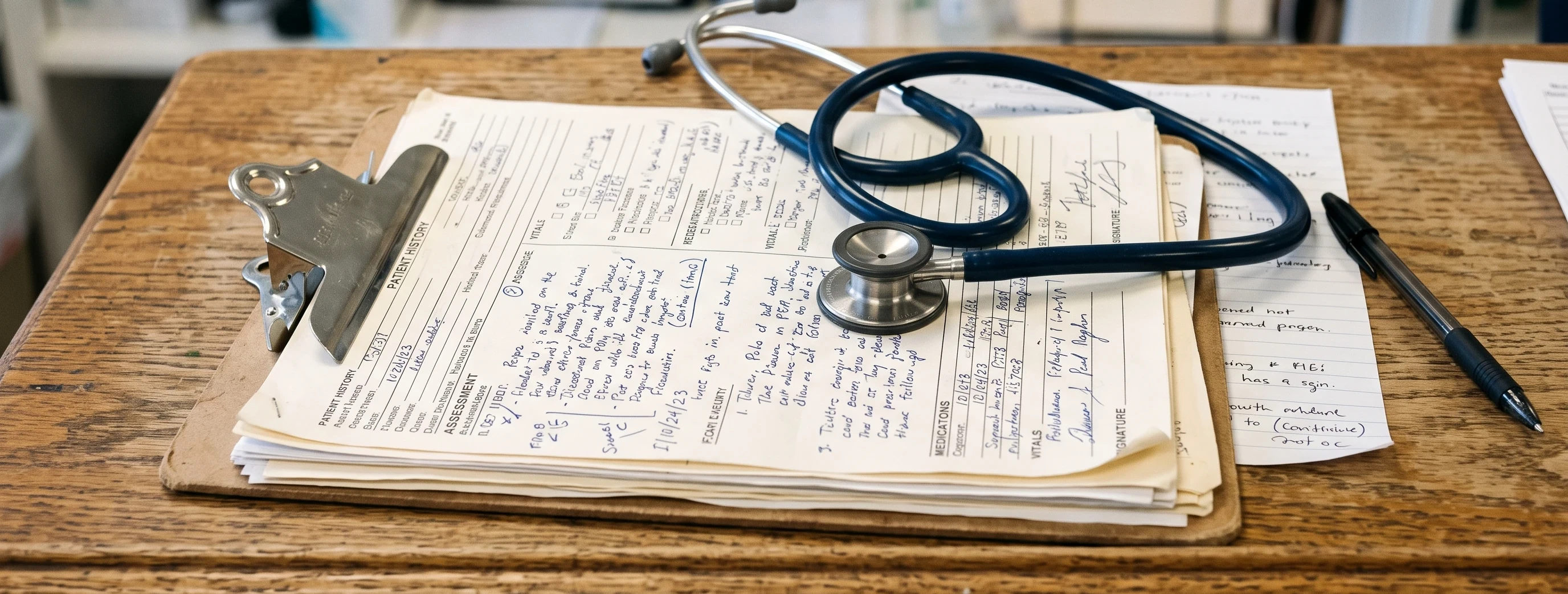
 Nursing home records serve as a foundation for both plaintiff and defense attorneys when investigating claims of negligence, abuse, or substandard care. These documents detail a resident’s care, medical events, and facility policies, so every word can impact the legal strategy or outcome.
In my experience reviewing these cases, I’ve seen documentation become a primary source of both strength and vulnerability for each side. Incomplete, inconsistent, or misleading notes can impact the arguments, sometimes leading to prolonged litigation or settlement challenges. A close look at common documentation mistakes helps lawyers on both sides build their strongest case and anticipate issues before they become bigger problems.
This article covers six pitfalls in nursing home documents that I see come up most often in litigation, and breaks down why these pose problems, along with what to look for, in a way that makes it easy for lawyers to organize their lists and arguments.
1. Incomplete Records: What’s Missing Can Matter Most
One of the most common problems I encounter is incomplete nursing home records. Missing daily care notes, skipped signatures on medication charts, or absent incident reports can leave major gaps in the story of what happened. For plaintiff attorneys, these missing pieces might hint at failures in care or attempts to hide problematic events. For defense lawyers, gaps make the facility vulnerable to claims of neglect, or can force them to admit uncertainty about timelines.
Easy Ways to Spot and List Incomplete Documentation
- Compare the care plan schedule with existing records. Are there blank spaces or obviously skipped shifts?
- Check medication administration records (MARs) for missing initials, unexplained blanks, or skipped entries.
- Look for incident reports for dates where injuries, infections, or falls are alleged. Absence of reports during these timelines should raise questions.
Any missing documentation is worth listing clearly for court submissions, using simple checklists to point out each gap by date and type. Attorneys should also look for patterns: are gaps clustered around shift changes, weekends, or staff vacations? Consistent patterns can indicate systemic issues that may strengthen a case for negligence or poor facility practices.
Sometimes incomplete records are due to high staff turnover or technology transitions. If the facility recently switched to a new electronic system, records from those periods should be reviewed with extra care. This kind of missing data can make it tough to reconstruct exact timelines but may open up new arguments about the home’s duty to preserve accurate records.
2. Contradictory Notes: When Records Don’t Match Up
I’ve reviewed many cases where the same event is described in different ways by various staff members. For example, a fall might be described as unwitnessed in one record yet mentioned as witnessed in another. Inaccurate or contradictory documentation can cause confusion and make it tough to reconstruct events.
How to Organize and Present Contradictions
- Create a side-by-side table of notes from each staff member about the incident or period in question.
- Highlight direct contradictions, such as the time of a reported fall, or differences in descriptions of bruising or resident status.
- List who wrote each note, including their credentials and timing, which can be helpful in depositions or cross-examinations.
When contradictions happen, I find that clear lists or charts make this issue plain to a judge or jury. Organizing these contradictions in a clear, visual format can show that there was uncertainty or miscommunication within the care team. This can support arguments for a lack of training, poor communication practices, or staff inattention. On the flip side, if contradictions are minor and explained by policy or routine, defense teams can use them to show the fallibility of memory rather than malice or willful neglect.
3. Late Entries and Altered Records: Timing Tells a Story
Late entries or altered documentation often show up in high-risk or high-liability events. Nurses sometimes document after the fact, especially if an incident was serious or will likely become an issue later. Defense attorneys may argue that late entries still reflect real care, but late or edited notes can lead to questions about credibility and accuracy.
Ways to List and Analyze Timing Issues
- Note every entry’s time and compare it against policy for real-time charting.
- Look for entries labeled “late entry” or signs of overwriting, different handwriting, or different ink colors in physical charts.
- Check audit trails in electronic records to confirm when entries were actually made or changed.
If there are patterns of late or altered entries, list them by date, subject, and who made them. This can be super important in showing intent or credibility issues. Attorneys should be aware of retroactive charting policies and check whether late notes comply with state or federal rules. The context around why a note was late—such as staff being overwhelmed during a crisis—can either explain or further complicate the facility’s defense.
In some cases, altered documentation becomes grounds for additional claims, such as spoliation of evidence. Pointing out these changes clearly for the court can raise serious questions about the reliability of the entire record.
4. CopyandPaste and Boilerplate Language: What Gets Missed
In electronic health records, copyandpaste functions tempt staff to reuse the same language for daily care, often overlooking subtle changes in resident status. For example, a series of identical notes that say “resident resting comfortably, no complaints” every shift can be suspicious if hospital records show pain or mood changes during the same time period.
Making Lists of Boilerplate Content
- Group repeated phrases across shifts or days. Look for “resting well,” “alert and oriented,” or similar language repeated over long periods.
- Highlight records where the only change is the date, while everything else is identical.
- Cross-reference these sections with outside provider notes for the same periods.
Pointing out repeated, generic content in list form is a quick way to demonstrate the potential for overlooked care needs. It also helps show whether staff was checking on residents personally or just filling in the blanks for compliance. Lawyers should dig into whether such notes were made during busy times or for high-need residents, as patterns might reveal systemic shortcuts in care.
5. Lack of Context: Details That Should Be Included
Many records skip background details or explanations that turn out to be essential later in a case. For instance, “skin tear, cleaned and dressed” might appear, but without an explanation of how the injury happened or if family was notified. This lack of context can make it hard for anyone—plaintiff or defense—to piece together the sequence of care and identify gaps in responsibility.
Steps to Spot and List Missing Context
- Scan progress notes for “what, when, how, who.” Missing pieces belong on your list and can be used to highlight the absence of important details.
- Review whether there is documentation showing that family or legal parties were notified after injuries, falls, or changes in health.
- Check if follow-up actions or monitoring are described, and list any that are not clearly detailed.
By listing where context is missing, lawyers can easily point to weaknesses or ambiguities in the facility’s documentation process. Beyond just court strategy, missing context can reflect on a facility’s approach to individualized care—if every event is documented the same way or lacks narrative, it may imply a deeper lack of personal attention to residents. This issue, when spelled out clearly, can persuade judges and juries about the facility’s quality of care without needing expert medical testimony for every detail.
6. Illegible or Technical Jargon: When Clarity Is Lacking
Handwritten notes, crowded fields, or heavy use of medical jargon can make records difficult for a nonclinical audience to understand. Both sides benefit from pointing out where illegibility or unclear medical shorthand is an issue, as these can make timelines and care quality harder to interpret for judges or juries.
Easy Ways to Flag and List HardtoRead Entries
- Identify any records where handwriting is hard to interpret, or entries are crossed out or scribbled over.
- Make a list of any abbreviations, codes, or technical terms that are not spelled out elsewhere, and provide clear definitions for the legal team or the court.
- Document any portions of the chart that simply do not make sense even after clinical review.
These issues are easy to organize in appendices or exhibits by highlighting or listing trouble spots and adding suggested clarifications for the record. Using a summary sheet with key translations of common medical abbreviations can save time during testimony or case preparation. Poorly legible records are not just an annoyance—if a crucial care note can’t be confidently read or understood, that ambiguity can sway a case in favor of the other side.
Final Thoughts
Nursing home documentation has lasting effects on both sides of a legal case. By watching out for incomplete notes, contradictions, late entries, repeated content, missing context, and unclear writing, lawyers can easily make lists that highlight the strengths and weaknesses of the evidence. A close and careful review of these issues helps attorneys build stronger arguments and anticipate what the other side may claim. As lawsuits around nursing home care continue to grow nationwide, staying sharp on documentation best practices will make case preparation more effective. Dig into records early, ask questions, and never underestimate the power of good note-taking as evidence in elder care litigation.